

In a world where gadgets seem to multiply faster than rabbits, sustainable technology emerges as the superhero we didn’t know we needed. It’s like that friend who insists on recycling while you’re still trying to figure out how to charge your phone without a wall outlet. But don’t worry—this isn’t just about saving the planet; it’s about making life easier and a whole lot cooler.
Overview of Sustainable Technology
Sustainable technology plays a pivotal role in promoting eco-friendly practices. Its importance extends beyond environmental benefits, influencing modern living and convenience.
Definition and Importance
Sustainable technology refers to innovations that fulfill present needs without compromising future generations’ ability to meet their own requirements. This concept promotes energy efficiency, waste reduction, and the use of renewable resources. Various studies indicate that adopting sustainable technology could lower global greenhouse gas emissions by up to 70% by 2050. The integration of sustainable practices in technology enhances economic growth while preserving resources and ecosystems.
Key Principles
Key principles of sustainable technology include resource efficiency, lifecycle assessment, and eco-design. Resource efficiency focuses on minimizing material use and energy consumption while maximizing output. Lifecycle assessment evaluates a product’s environmental impact across its entire lifespan, guiding sustainable choices. Eco-design prioritizes sustainability in the development phase, ensuring products are designed for minimal environmental impact. These principles collaboratively drive innovation, enabling businesses and consumers to make environmentally conscious decisions.
Types of Sustainable Technology
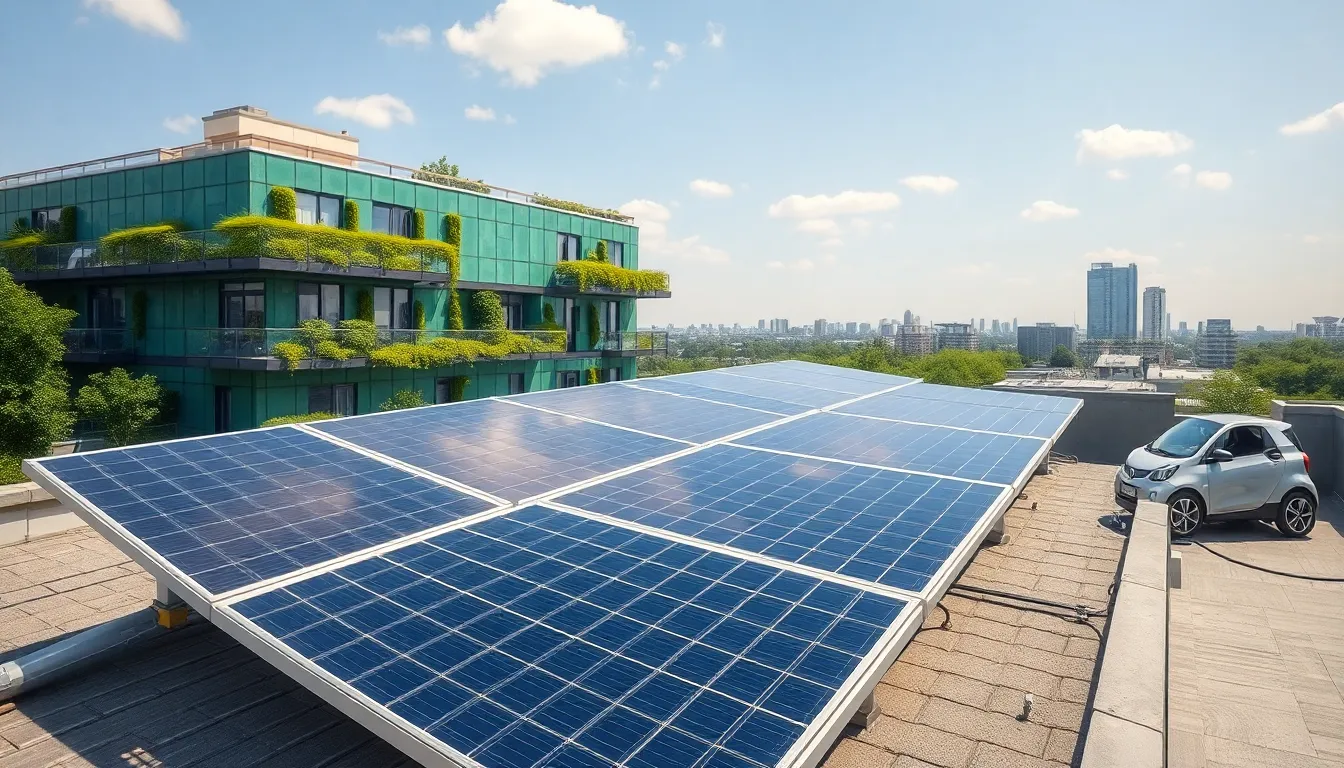
Sustainable technology encompasses various innovations that promote environmental preservation. Three key categories include renewable energy solutions, green building practices, and sustainable transportation systems.
Renewable Energy Solutions
Renewable energy solutions harness natural resources to generate power sustainably. Solar panels, wind turbines, and biomass systems exemplify innovations that reduce dependence on fossil fuels. Solar panels convert sunlight into electricity, providing clean energy for homes and businesses. Wind turbines capture wind energy, generating significant power while minimizing greenhouse gas emissions. Biomass systems utilize organic materials, offering alternative fuel sources. Together, these solutions significantly lower carbon footprints and enhance energy security.
Green Building Practices
Green building practices create structures that efficiently use resources and energy. These practices incorporate energy-efficient appliances and prioritize sustainable materials. For instance, using recycled materials minimizes waste while promoting environmental stewardship. Incorporating insulation reduces energy consumption, fostering comfortable living conditions. Features like green roofs and rainwater harvesting systems support biodiversity and enhance water conservation. By implementing these practices, buildings contribute to sustainable urban development and improve overall quality of life.
Sustainable Transportation
Sustainable transportation focuses on reducing emissions and promoting environmentally friendly travel options. Electric vehicles (EVs) represent a significant shift from traditional gasoline-powered cars, emitting no tailpipe pollutants. Public transit systems, such as buses and trains, lower congestion while decreasing individual carbon footprints. Additionally, cycling and walking offer eco-friendly alternatives for short distances. By prioritizing these transportation methods, communities enhance air quality and foster a healthier environment for everyone.
Benefits of Sustainable Technology
Sustainable technology offers numerous advantages across environmental, economic, and social dimensions. These benefits collectively contribute to a more responsible and progressive future.
Environmental Impact
Sustainable technology significantly reduces greenhouse gas emissions. According to studies, adopting such practices could lower emissions by up to 70% by 2050. Innovations like solar energy systems and wind turbines utilize renewable resources, lessening reliance on fossil fuels. Waste reduction practices in industries and homes result in fewer landfills. Moreover, eco-design principles minimize resource use throughout a product’s lifecycle, fostering a cleaner environment.
Economic Advantages
Economic growth often aligns with sustainable technology adoption. Businesses implementing energy-efficient systems experience reduced operating costs due to lower energy consumption. The shift to renewable energy creates job opportunities in manufacturing, installation, and maintenance sectors. Furthermore, sustainable practices attract environmentally conscious consumers, driving demand for greener products. Long-term investment in sustainable technologies can yield significant financial returns, enhancing competitiveness in the market.
Social Benefits
Sustainable technology promotes healthier communities and improves quality of life. Access to clean energy leads to better air quality, reducing respiratory issues. Green buildings create healthier living environments with improved indoor air quality. Sustainable transportation options such as electric vehicles and public transit foster community connectivity. Additionally, promoting awareness about sustainability encourages civic responsibility, driving positive social change.
Challenges Facing Sustainable Technology
Implementing sustainable technology faces several challenges that hinder progress and adoption. Key areas include technological barriers, economic constraints, and public perception.
Technological Barriers
Innovations often face significant technological barriers that prevent widespread adoption. Current infrastructure may not support renewable energy sources, leading to inefficiencies. Accessing advanced technologies can be costly, making it difficult for smaller businesses to transition. While some solutions exist, many emerging technologies require further development. Maintenance and integration with existing systems pose additional challenges that can prolong the transition. Overcoming these obstacles is essential to streamlining processes and ensuring sustainable technology’s success across industries.
Economic Constraints
Economic constraints play a crucial role in the slow adoption of sustainable technology. Initial investment costs deter businesses from transitioning to greener solutions. Although long-term savings can offset these costs, immediate financial pressures often take precedence. Public funding for sustainable projects can lag due to competing priorities. Profitability concerns lead some companies to hesitate, fearing that sustainability initiatives may impact performance. Addressing these constraints requires innovative financing solutions and government incentives to promote meaningful investment in sustainable technology.
Public Perception
Public perception greatly impacts the acceptance of sustainable technology. Many consumers lack awareness regarding the benefits of sustainable options. Misconceptions about costs and effectiveness create resistance to adoption. Furthermore, some view sustainable practices as a luxury rather than a necessity. Targeted education efforts can help bridge this gap. Changing public attitudes takes time, but increased visibility and proven benefits can drive momentum toward embracing sustainable technology solutions. Engaging communities through initiatives can foster a shared understanding of sustainability’s importance in daily life.
Future of Sustainable Technology
Sustainable technology continues evolving, driven by innovations and regulatory advancements. Upcoming developments promise to enhance efficiency and accessibility for consumers and businesses.
Innovations on the Horizon
Rapid advancements in sustainable technology showcase exciting innovations. Artificial intelligence aids in optimizing energy consumption, allowing systems to adapt in real-time. Battery technology is improving, with breakthroughs in solid-state batteries offering higher capacities and shorter charging times. Additionally, carbon capture technology actively reduces atmospheric CO2 levels, proving vital for climate goals. These innovations pave the way for a cleaner and more sustainable future.
Policy and Regulation Developments
Government policies increasingly favor sustainable technology adoption. Legislation demands stricter emissions standards, compelling industries to innovate. Incentives for renewable energy projects encourage investment in sustainable solutions. Furthermore, international agreements, like the Paris Agreement, drive countries to set ambitious climate targets. These regulatory frameworks support a collaborative approach to achieving environmental goals while fostering economic growth.
Sustainable technology represents a transformative shift in how society approaches environmental challenges. By embracing innovations that prioritize efficiency and resource conservation, individuals and businesses can contribute to a healthier planet. The integration of renewable energy, green building practices, and sustainable transportation not only addresses pressing ecological issues but also fosters economic growth and community well-being.
As advancements continue and public awareness grows, the potential for sustainable technology to reshape industries and lifestyles becomes even more promising. Overcoming the existing challenges will require collective effort and commitment. With the right support and education, a sustainable future is within reach, benefiting both current and future generations.